Switzerland's most glamorous alpine resort — world-class skiing, pristine lakes, and the starting point of the UNESCO Bernina Express.
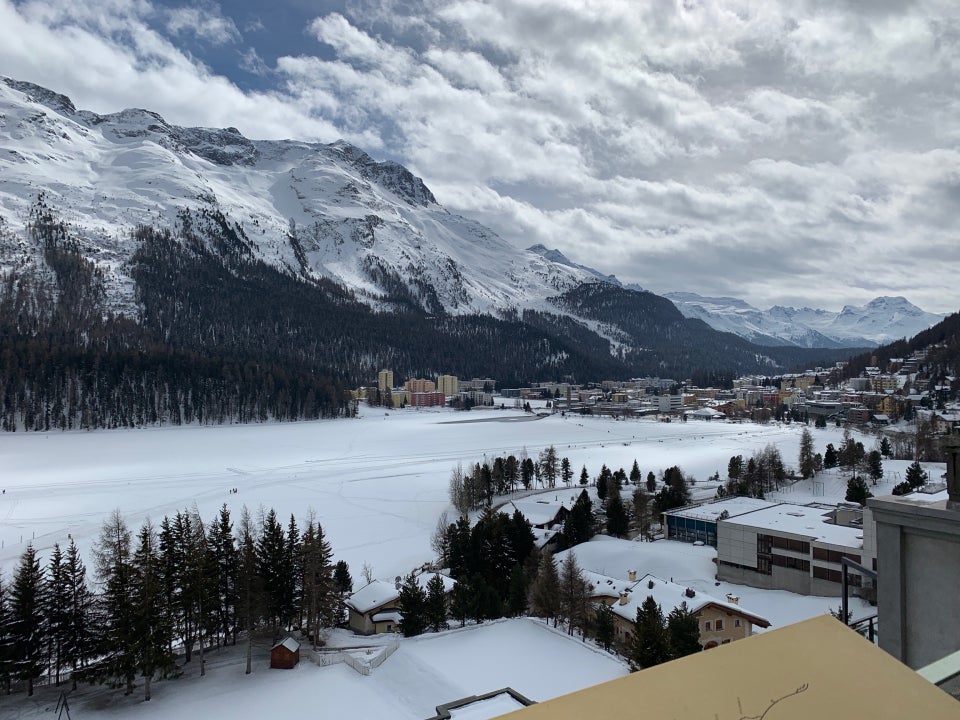
Explore St. Moritz Tours →St. Moritz is one of the world's most famous alpine resorts, located in the Upper Engadin valley of the Swiss canton of Graubünden at 1,856 metres above sea level. It has hosted the Winter Olympics twice (1928 and 1948) and has been a synonym for luxury mountain travel since the late 19th century, when British tourists discovered the crisp Alpine air and pristine snow.
Yet St. Moritz is far more than a ski resort. In summer it transforms into a hiking, cycling, and sailing destination. The town sits above a glacial lake, surrounded by dramatic peaks, with access to some of the finest mountain scenery in the Alps. It is also the northern starting point of the Bernina Express — one of the world's great train journeys.
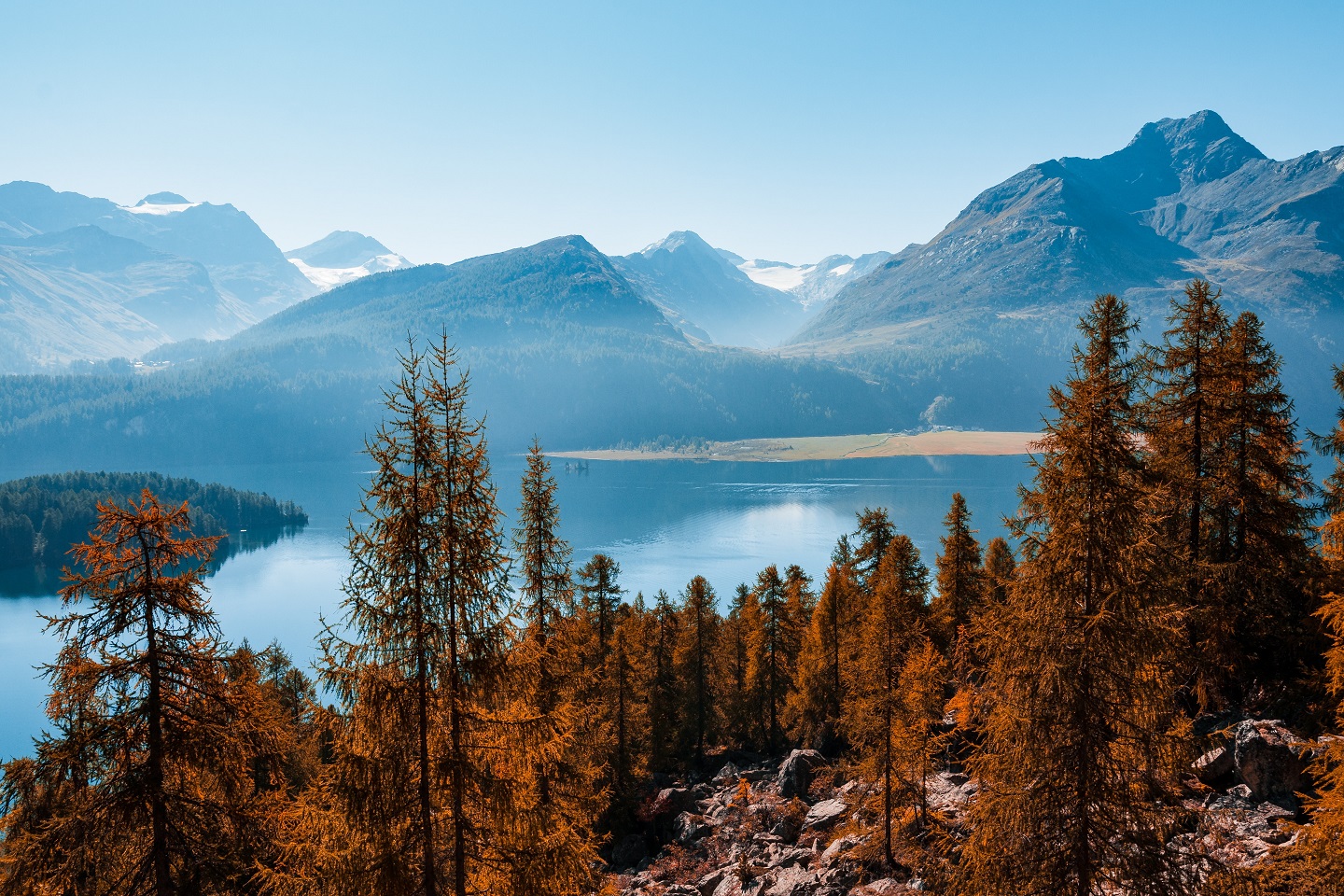
The St. Moritzersee is a glacial lake at 1,768 metres — the centrepiece of the resort town and one of the most photographed spots in the Alps. In summer, the water turns a deep turquoise-blue against the backdrop of the Engadin peaks. Visitors swim, sail, windsurf, and kitesurf on the lake. A leisurely walk around the lake takes about an hour.
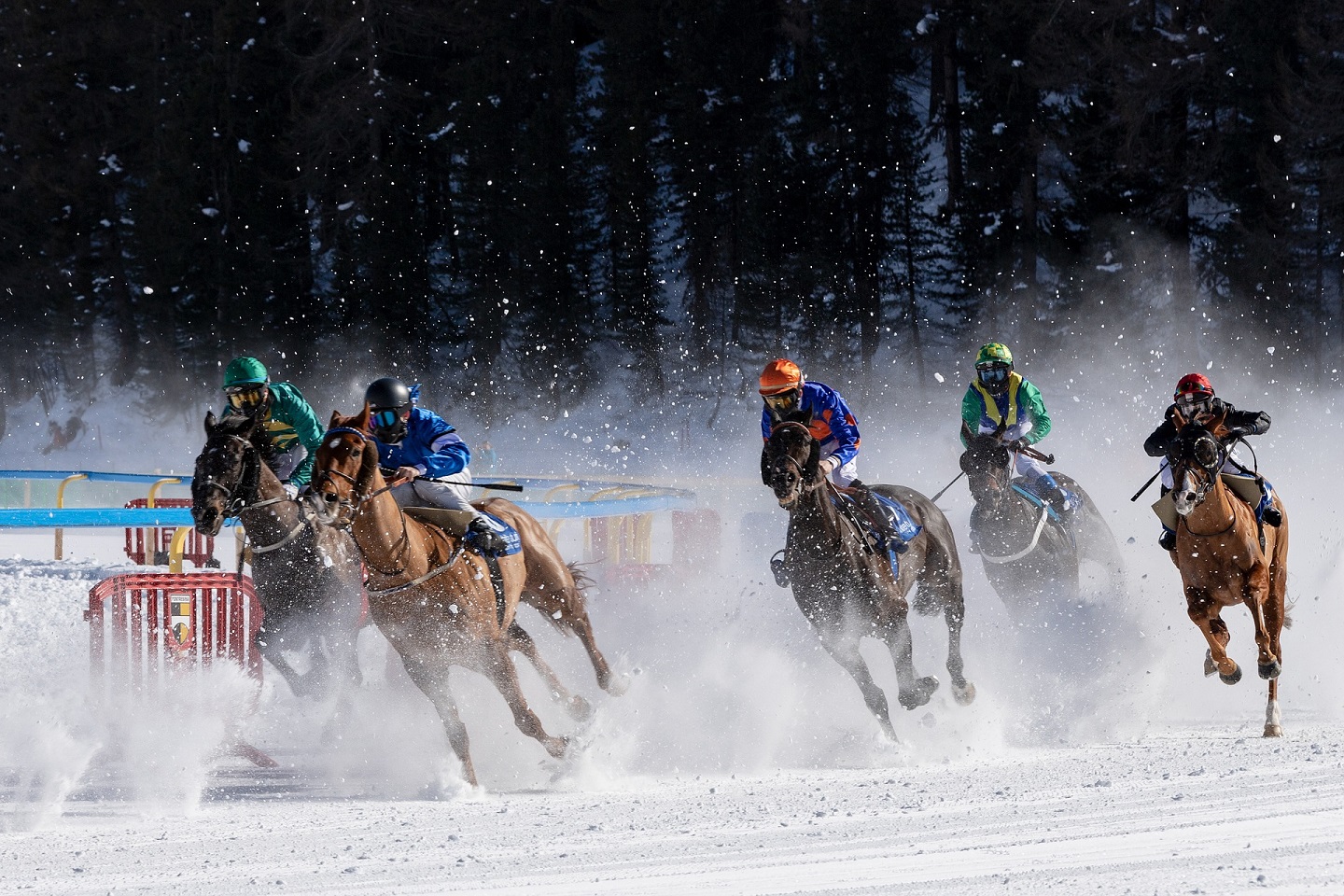
In winter, the lake freezes solid enough to host extraordinary events: the famous White Turf horse races are held on the frozen lake surface in February, drawing crowds from across Europe. The lake also becomes the venue for polo-on-snow, cricket-on-ice, and other distinctly St. Moritz spectacles.
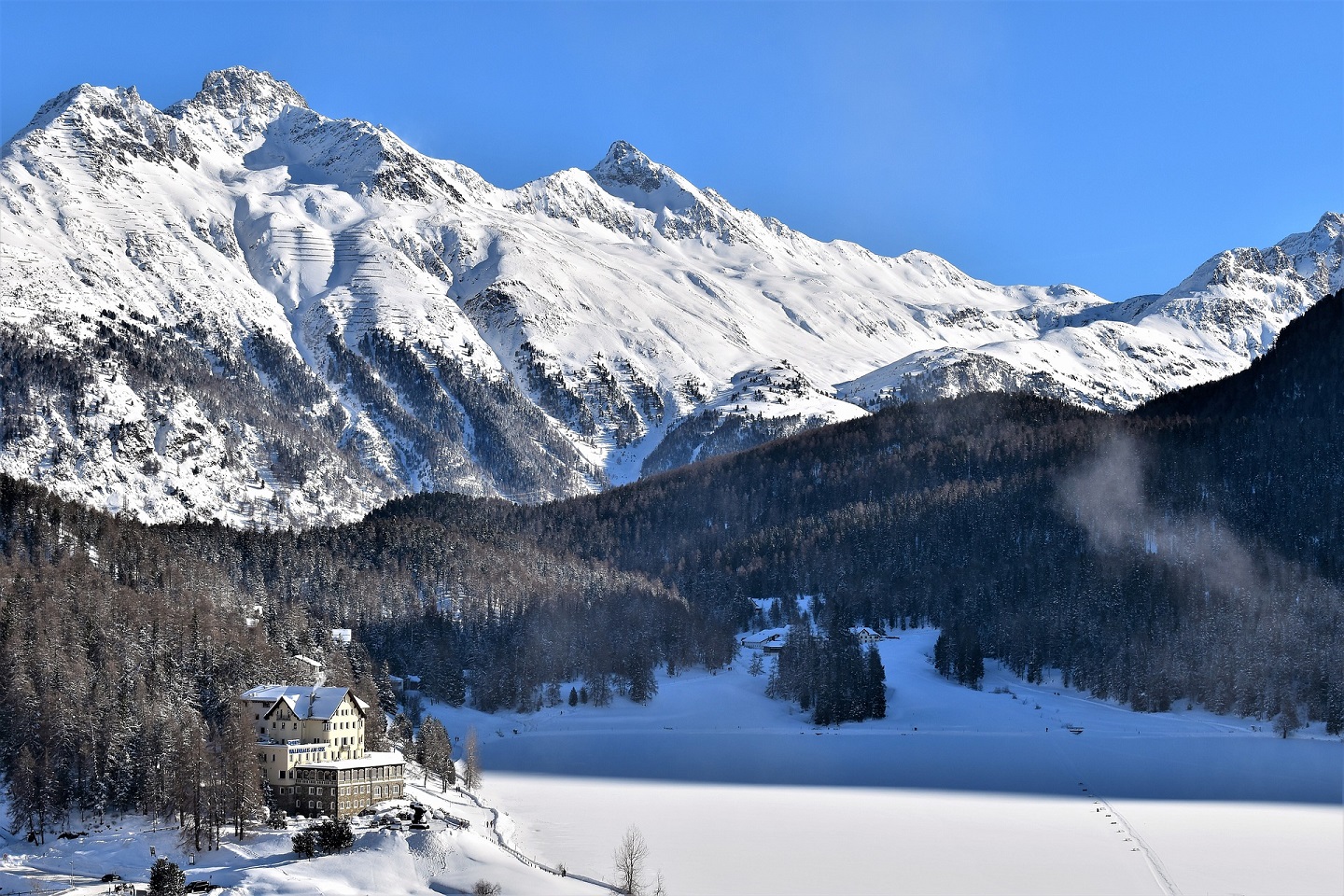
St. Moritz sits at the heart of the Upper Engadin (Oberengadin), a high alpine valley running roughly east-west through Graubünden. The valley is exceptionally wide by Alpine standards, with a flat valley floor at over 1,700 metres surrounded by peaks rising to 3,000–4,000 metres.
The Engadin has a distinctive cultural identity: the local language is Romansh (specifically Rumantsch Vallader), one of Switzerland's four national languages, still spoken in the valley alongside German and Italian. Village names — Celerina, Samedan, Pontresina, Zuoz — reflect this Latin heritage.
The valley contains a string of lakes (Silvaplanersee, Silsersee, Malojasee) connected by the Inn river, which flows east toward Austria. A cycle path runs the entire length of the valley, making it one of the most scenic bike routes in Switzerland.
St. Moritz is part of one of the largest ski areas in Switzerland, with access to three main mountain areas offering over 350 km of pistes:
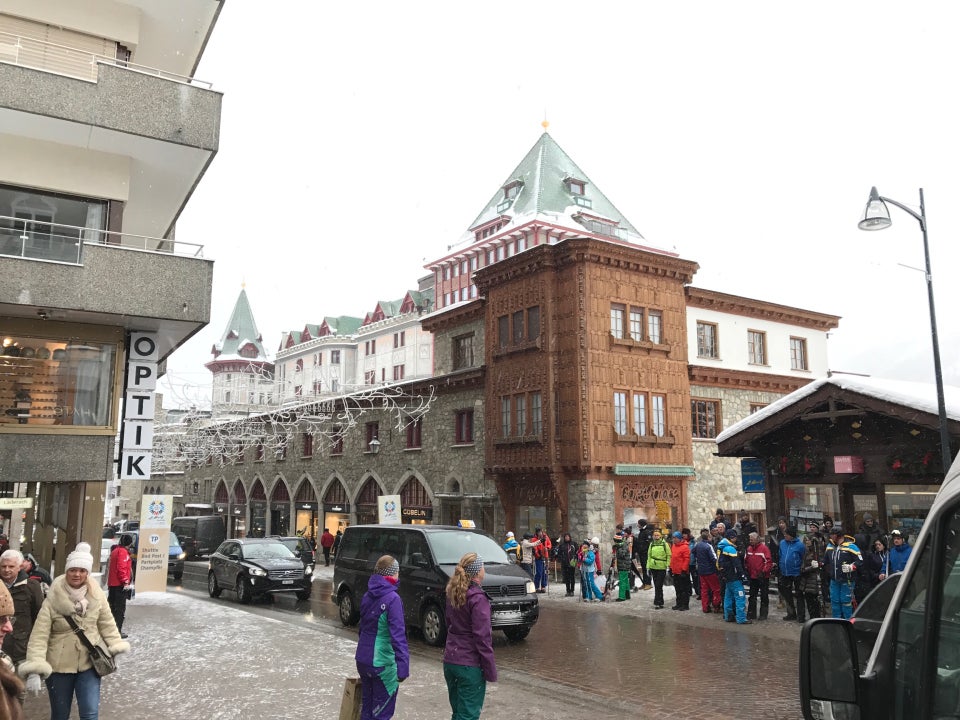
The main ski area above St. Moritz Dorf, accessed by the Corviglia Funicular from the town centre. Wide, sun-drenched pistes with spectacular Engadin views. Suitable for all levels. Home to the famous Quattro Bar at the top.
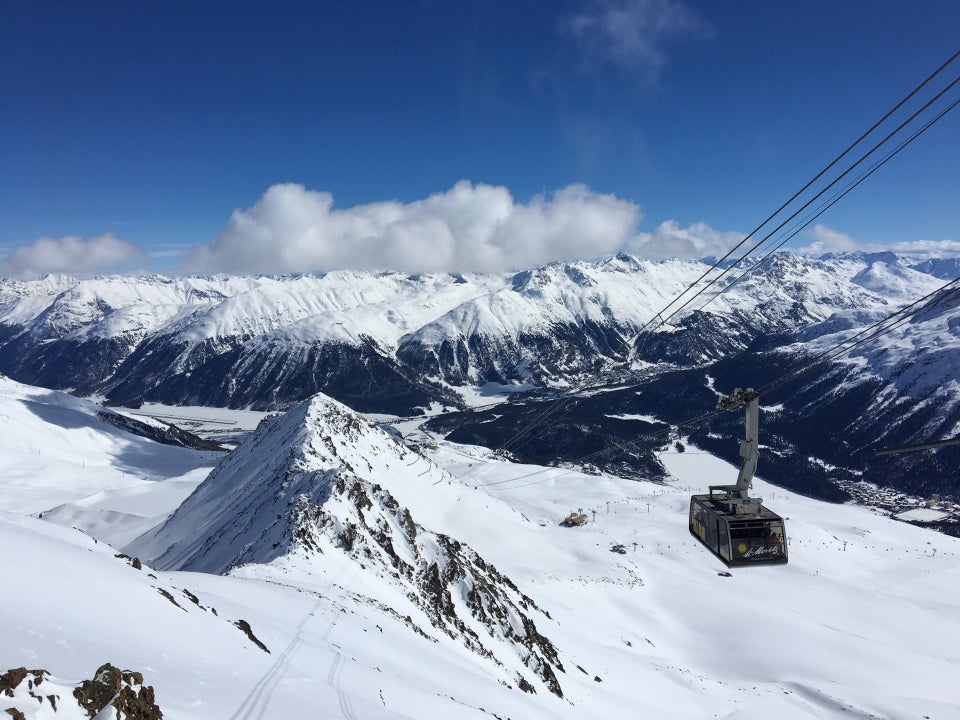
The highest accessible peak in the Corviglia area, reached by cable car from Corviglia. Panoramic 360° views over the Engadin and towards the Bernina massif. Advanced off-piste terrain.
Reached from Silvaplana by cable car. Higher and wilder than Corviglia, with glacier skiing and challenging runs. Breathtaking views over the Bernina range and the Maloja Pass.
Above Pontresina (15 min from St. Moritz), this area offers glacier skiing and the famous Diavolezza traverse across the Morteratsch Glacier. One of the great glacier tours in the Alps. Accessible by cable car from the Bernina road.
A funicular from Punt Muragl (between Celerina and Pontresina, ~15 min by bus from St. Moritz) reaches this spectacular viewpoint above the valley. More famous for its views and hiking than skiing. The sunset panorama over the Upper Engadin lakes is exceptional.
Beyond skiing, St. Moritz offers snowboarding parks, cross-country ski trails (the Engadin valley has world-class Langlauf tracks), sledging runs, ice skating on natural rinks, polo on snow, horse racing on the frozen lake, and heli-skiing excursions.
St. Moritz is the most popular starting point for the Bernina Express — the UNESCO World Heritage panoramic train that crosses the Alps into Italy. From St. Moritz station, the train climbs through the Engadin valley before ascending to the Bernina Pass at 2,253 metres, then descending dramatically into the Valtellina to reach Tirano, Italy.
The journey from St. Moritz to Tirano takes approximately 2 hours 30 minutes. It is one of the most spectacular train rides in the world and should be on the itinerary of any visitor to St. Moritz, even if just for the views from Ospizio Bernina and the Brusio spiral viaduct.
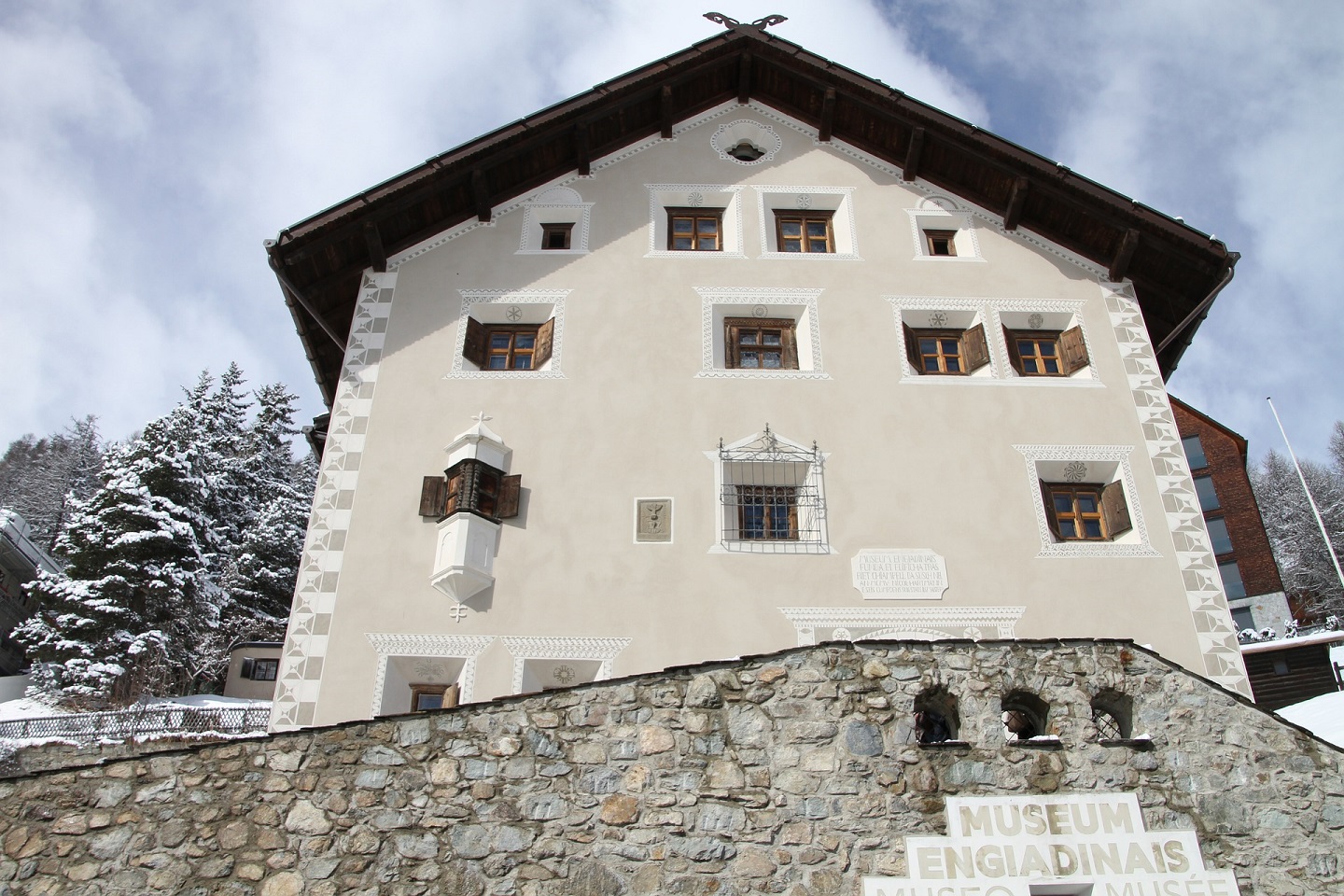
The most important museum in the valley, housed in a beautiful traditional Engadin farmhouse dating to 1906. Permanent collections cover the history, culture, folk art, and everyday life of the Engadin from the Middle Ages to the modern era. Furniture, costumes, regional crafts, and historic interiors are all preserved. A genuine window into the culture behind the resort.
Dedicated to Giovanni Segantini (1858–1899), the great Italian-Swiss symbolist painter who spent the last decade of his life in the Engadin. The museum, built in 1908 in a distinctive domed neo-Byzantine style, houses his monumental Alpine Triptych (Life, Nature, Death) — three vast canvases that remain the defining artistic representation of the Engadin landscape. An unmissable cultural stop.
St. Moritz's own leaning tower — a 12th-century Romanesque bell tower that tilts noticeably to one side, the result of centuries of uneven settling. It is one of the oldest structures in the Engadin and a landmark of the town. It stands next to the ruins of the old parish church of St. Mauritius.
A historic Catholic church in St. Moritz Dorf, notable for its baroque interior and its role as one of the main parish churches of the resort. Worth a brief visit for the architecture and the quiet it provides amid the bustle of the town.
One of Europe's most respected galleries for Russian avant-garde and 20th-century classical modern art, with a permanent presence in St. Moritz. Rotating exhibitions of major works by Chagall, Kandinsky, Malevich, and others. Free to enter. A surprisingly world-class cultural offering for an alpine resort.
A St. Moritz institution since 1894. This historic café and pastry shop on the Via Maistra is the place to stop for hot chocolate, Engadin nut tart (Nusstorte), and homemade chocolates. The interior retains its original 19th-century character. A non-negotiable stop for anyone with a sweet tooth.
St. Moritz is an excellent base for exploring the surrounding Engadin valley and nearby areas:
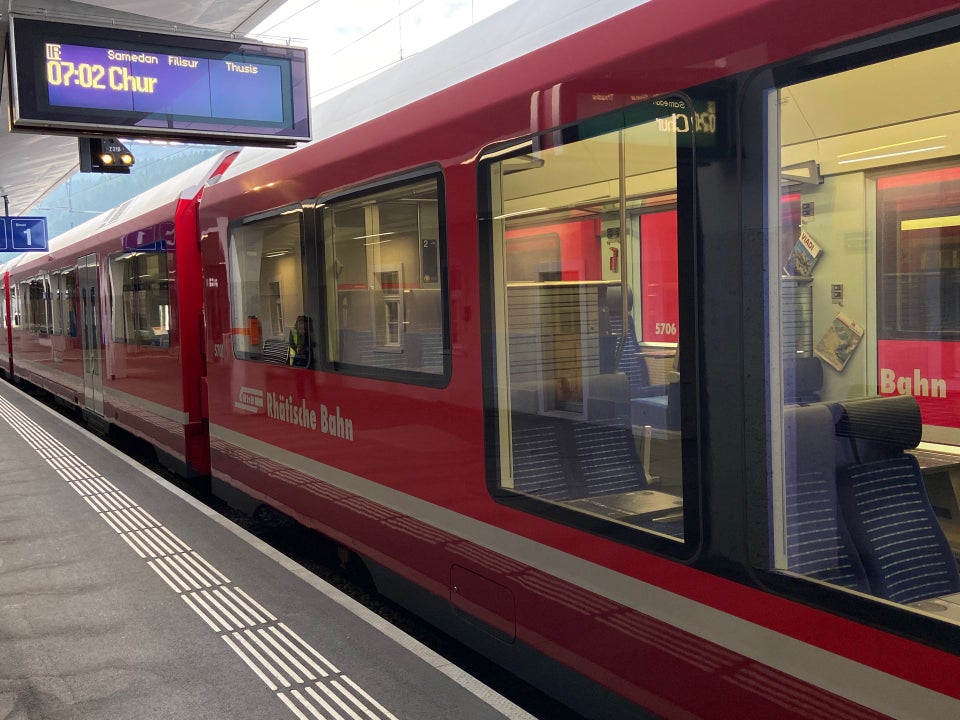
St. Moritz is well served by the Rhaetian Railway (RhB). The main connection is via Chur, which is accessible by direct IC trains from Zurich (~1 h 10 min), Bern, and Basel. From Chur, the Albula line — itself a UNESCO World Heritage route — winds through spectacular gorges and spiral tunnels to reach St. Moritz in about 2 hours. Total journey from Zurich: approximately 3 hours 30 minutes.
From Milan, the most scenic approach is via Tirano and the Bernina Express northbound (approx. 5 hours total including the train from Milan to Tirano). Alternatively, take a train from Milan to Chur via Zurich.
St. Moritz is reachable by road via the Julier Pass (open year-round) or the Maloja Pass from Italy. From Zurich, the drive takes approximately 2 hours 30 minutes via the A3/A13 motorway and then mountain roads. Note that St. Moritz Dorf has a pedestrian centre and parking can be expensive; the train is generally more convenient.
The nearest major airports are Zurich (ZRH, ~3.5 h by train) and Milan Malpensa (MXP, ~4 h). Samedan Airport (SMV), 5 km from St. Moritz, handles private and charter flights.
St. Moritz has a wide range of accommodation — though as a luxury resort, prices are among the highest in Switzerland, especially in peak winter (late December–March) and summer (July–August).
The main resort village has the highest concentration of 5-star hotels, designer shops, and gourmet restaurants. Iconic hotel names in St. Moritz include Badrutt's Palace and the Kulm Hotel. Prices reflect the prestige.
The lower village (Bad = spa), slightly less expensive than Dorf. Closer to the lake and the famous Kursaal spa facilities. A good balance of location and price for families.
Staying in a neighbouring village (3–6 km) significantly reduces costs while keeping you close to St. Moritz ski areas. Both Celerina and Pontresina have good public transport connections and a more local feel.
Book well in advance for the high season (Christmas–New Year, February school holidays, and July–August). Many hotels offer half-board packages that include breakfast and dinner, which can represent good value given the high cost of eating out.
Absolutely. Summer in St. Moritz is spectacular: the lake turns deep blue, the mountains are accessible for hiking, and the town is considerably less crowded and cheaper than in winter. The Engadin valley offers excellent cycling and hiking, and the cable cars to Corviglia and Corvatsch operate in summer with access to high-altitude trails. The Bernina Express runs year-round and is equally beautiful in summer.
The Corviglia Funicular departs from St. Moritz Dorf (the upper village), and takes you to Chantarella and then Corviglia at 2,486m. From Corviglia, a cable car continues to Piz Nair at 3,057m. The funicular is a short walk from the main pedestrian area of St. Moritz Dorf — one of the great conveniences of the resort is that the main ski area is directly accessible from the town centre on foot.
St. Moritz claims 322 sunny days per year — one of the highest figures in the Alps. For skiing, December to April is the season, with the best snow conditions typically in January and February. For hiking and summer activities, July and August are ideal. Shoulder seasons (late April–June and September–November) offer lower prices, fewer crowds, and stunning light for photography, though some facilities may be closed.
The most comfortable route is by train: IC from Zurich HB to Chur (about 1 h 10 min), then the Rhaetian Railway Albula line from Chur to St. Moritz (about 2 h). Total: approximately 3 hours 15–30 minutes with a connection in Chur. The Albula route itself is a UNESCO World Heritage journey and very scenic. Trains run several times per day.
It is possible as a very long day from Zurich (roughly 7 hours of travel for a few hours in town), but not recommended — the journey time makes it impractical for a single day. St. Moritz is best appreciated with at least 2–3 nights. If you're combining it with the Bernina Express to Tirano, the one-way train journey means you'll naturally be staying at least one night somewhere along the route.
Yes — St. Moritz is one of the most expensive destinations in Switzerland, which is already a high-cost country. Accommodation in peak season is very expensive, and restaurants in the centre are priced accordingly. That said, staying in a neighbouring village like Pontresina or Celerina, using supermarkets for some meals, and visiting in the shoulder season can all significantly reduce costs. The scenery and mountain access are free regardless of where you sleep.
The Segantini Museum is dedicated to Giovanni Segantini (1858–1899), the symbolist painter who spent the last years of his life in the Engadin. His monumental Alpine Triptych — three large canvases representing Life, Nature, and Death against the backdrop of the Engadin landscape — is considered his masterpiece and is permanently displayed here. The museum building itself, with its distinctive dome, was designed specifically to house the triptych and is worth seeing for the architecture alone.