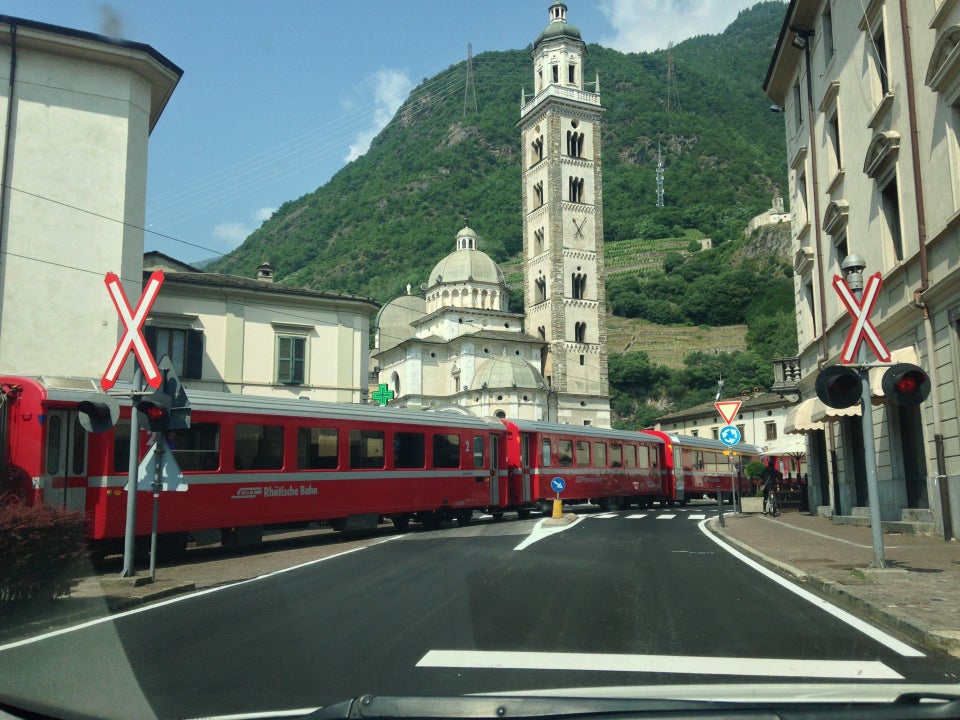
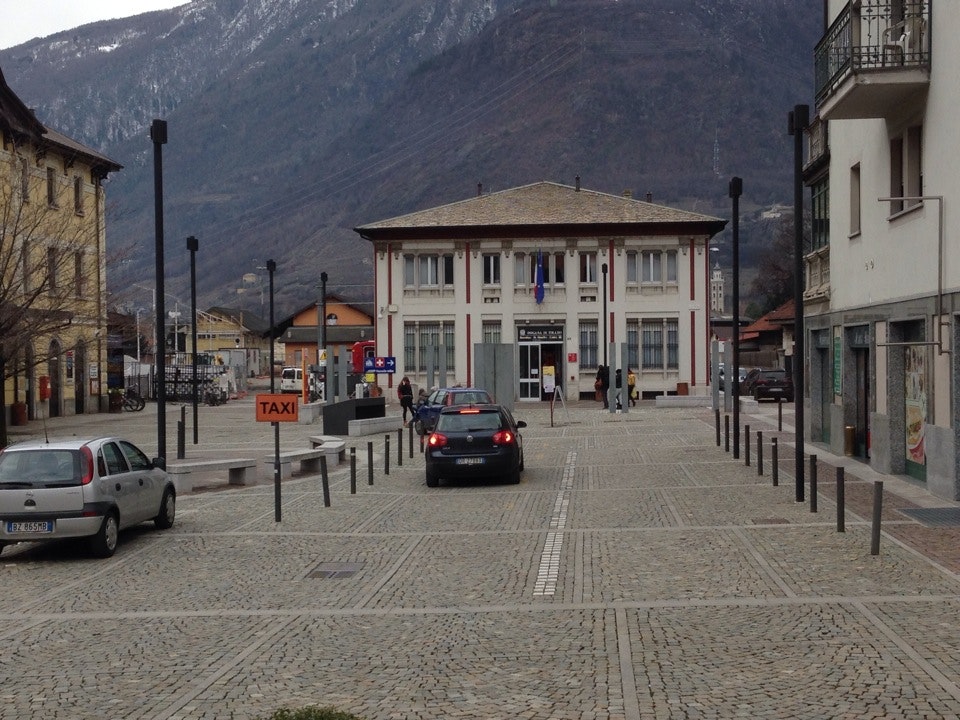
A charming Italian town in the Valtellina valley — where the UNESCO Bernina Express arrives from the Swiss Alps.
Book a Bernina Express Tour →Tirano is a small town of about 9,000 inhabitants in the Valtellina valley, in the province of Sondrio, northern Italy. It sits at just 441 metres above sea level — a dramatic contrast to the Swiss Alpine landscapes that surround the Bernina Express route.
For most visitors, Tirano is the southern terminus of the Bernina Express — the UNESCO World Heritage panoramic train that climbs over the Alps to 2,253 metres before descending to St. Moritz. But Tirano deserves more than a brief stop: its Renaissance basilica, noble palaces, historic streets, and local gastronomy make it a destination in its own right.
The absolute highlight of Tirano is this magnificent Renaissance basilica, built in 1505 following a reported apparition of the Virgin Mary to a local man named Mario Omodei on 29 September 1504. It is one of the most important Marian sanctuaries in Lombardy and still draws pilgrims from across northern Italy and Switzerland.
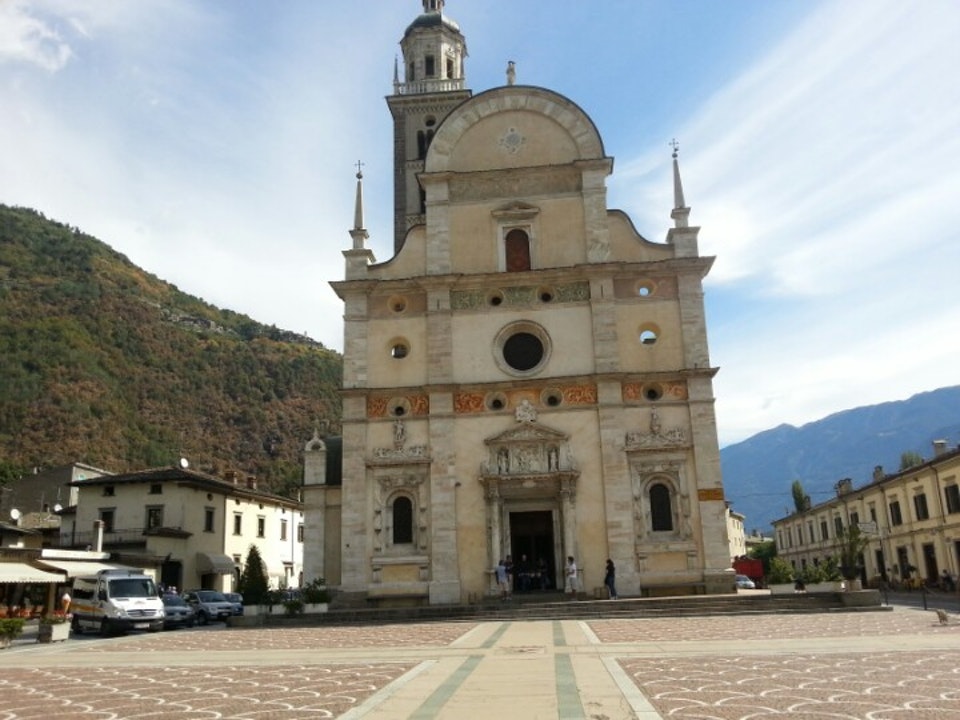
The interior is richly decorated with frescoes, carved wooden choir stalls, and a celebrated 16th-century organ considered one of the finest in northern Italy. The church stands right next to the Bernina Express tracks — the red train literally passes within metres of the facade, which creates one of the most iconic images of the entire route.
Entry is free. Dress respectfully (shoulders and knees covered). The Santuario also has a small museum and a historic pharmacy within the complex. Allow 30–45 minutes inside.
Tirano was historically an important trading town on the route between northern Europe and Italy, which explains its remarkable concentration of noble palaces for a town of its size. The following are the most notable:
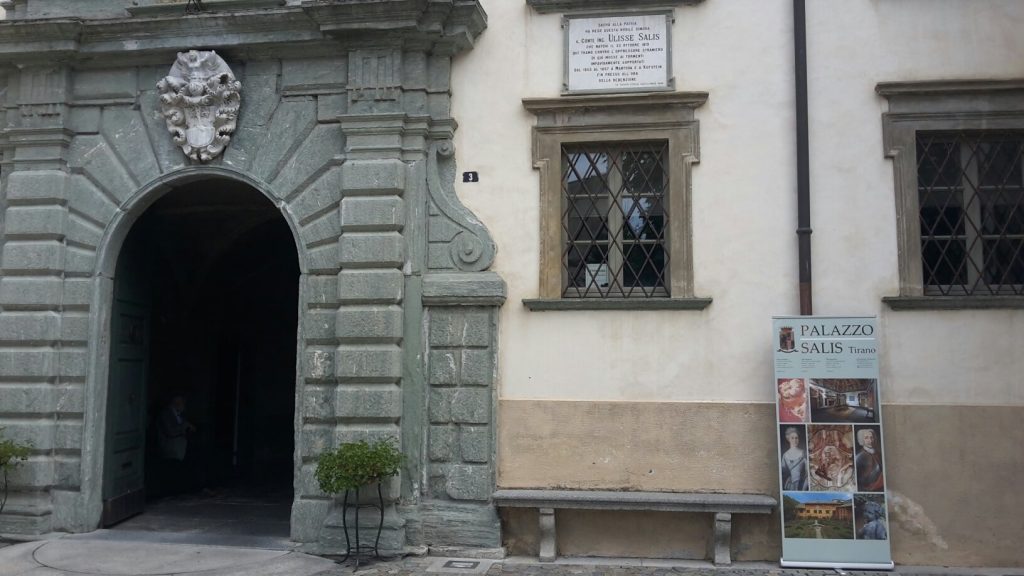
The most celebrated palace in Tirano. Built in the 17th century by the powerful Salis family from Graubünden (Switzerland), it features frescoed interiors, a grand staircase, and a formal Italian garden. Occasionally open for guided visits.
A historic house-museum belonging to the Lambertenghi family, preserving period furniture, artwork, and objects that reflect the lifestyle of Tirano's noble classes in past centuries.
Another example of Tirano's aristocratic heritage, with a distinctive façade typical of Valtellina noble architecture. Located in the historic centre near Piazza Cavour.
One of several Renaissance-era residences in the town centre, reflecting the prosperity Tirano enjoyed as a crossing point between Italian and Swiss territories.
Also worth noting: the former Convent of the Augustinians, now home to the town hall (Municipio). The cloister and chapel can sometimes be seen during opening hours.
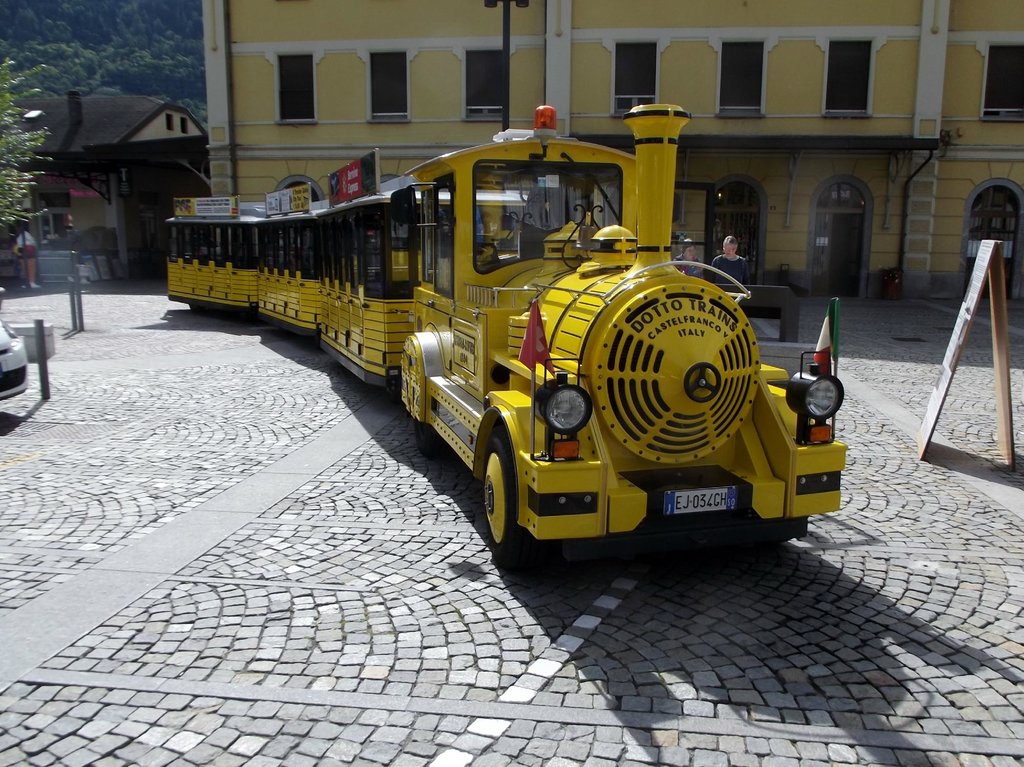
Tirano has its own small local tram — affectionately known as Il Trenino Giallo (the little yellow train). This narrow-gauge tram runs through the town between the main Tirano station and the area near the Santuario della Madonna di Tirano, following a route through the old town streets.
It's a fun and charming way to move through town — especially with children — and part of the local character. The tram runs on a seasonal schedule; check locally for current operating days and times.
The Valtellina valley is renowned throughout Italy for its distinctive mountain cuisine. Arriving in Tirano from Switzerland, you'll notice the food culture shifts immediately — buckwheat replaces wheat, local cheese replaces fondue, and Nebbiolo wine replaces Swiss whites.
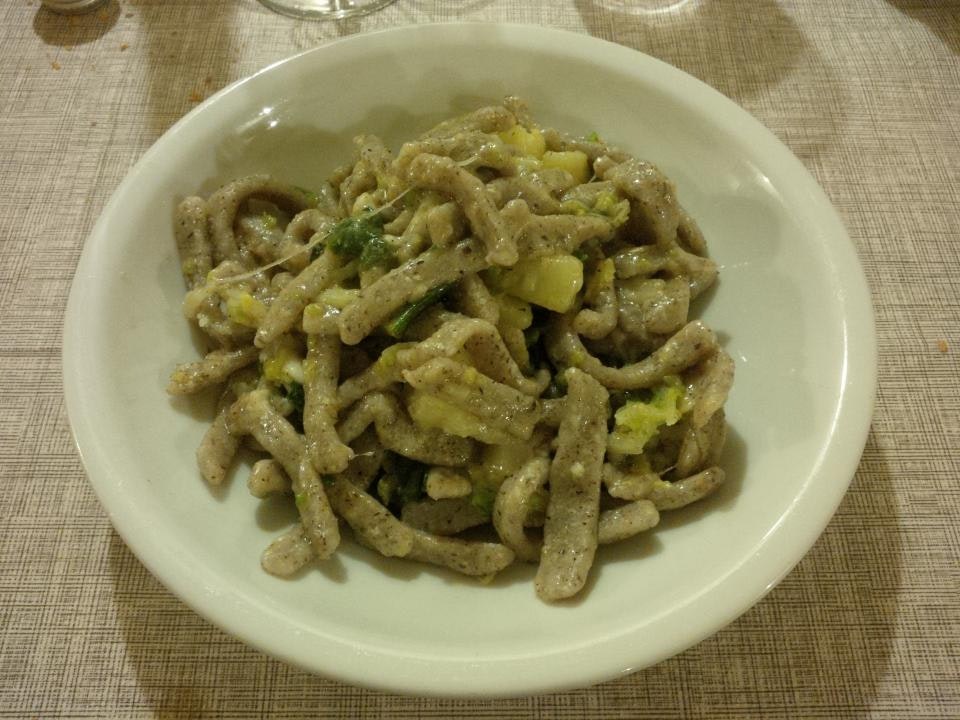
Restaurants near the train station tend to be more tourist-oriented. Walk 5–10 minutes into the old town towards Piazza Cavour for better quality. Note that Italian restaurants typically close between 2:30 and 7 pm — time your meals accordingly.
Tirano has a modest range of accommodation, including small hotels, B&Bs, and agriturismo farms in the surrounding valley. Most visitors either pass through on a day trip or use Tirano as a base for 1–2 nights to explore the Valtellina.
If you're arriving on the Bernina Express for a day trip, accommodation in Tirano is not necessary — the town is compact enough to cover in 2–3 hours before continuing your journey.
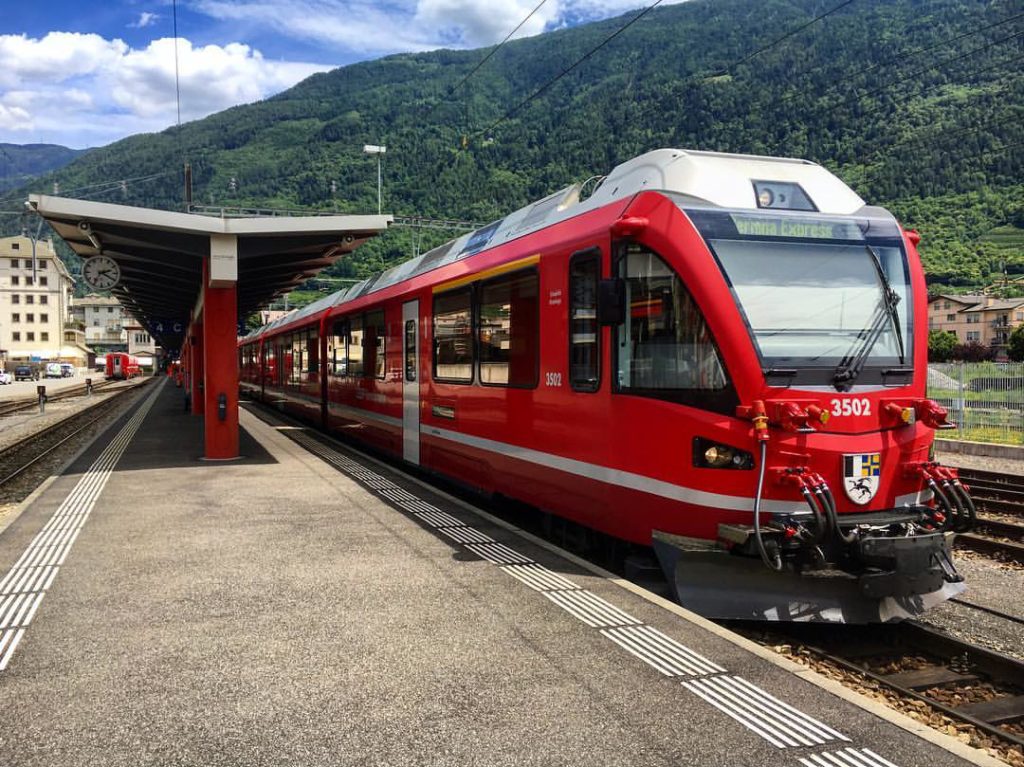
The Bernina Express is one of the world's great train journeys — and Tirano is where it begins (or ends) on the Italian side. From Tirano, the train climbs through the spiral viaduct of Brusio, past the vineyards of Poschiavo, up to the glacial lake of Lago Bianco, over the Bernina Pass at 2,253 metres, and down to St. Moritz through the Engadin valley.
The panoramic cars have large windows and open-air observation platforms on some services. Seat reservations are required and can sell out weeks in advance in summer.
The most scenic option by far. The Bernina Express from St. Moritz to Tirano takes approximately 2 hours 30 minutes over the UNESCO World Heritage route. Read our full Bernina Express guide →
Tirano is directly connected to Milan by Trenitalia regional service (line S2). Journey time: approximately 2 hours 20–40 minutes with no changes, departing from Milano Centrale or Milano Porta Garibaldi. Trains run throughout the day, making Tirano an easy day trip from Milan.
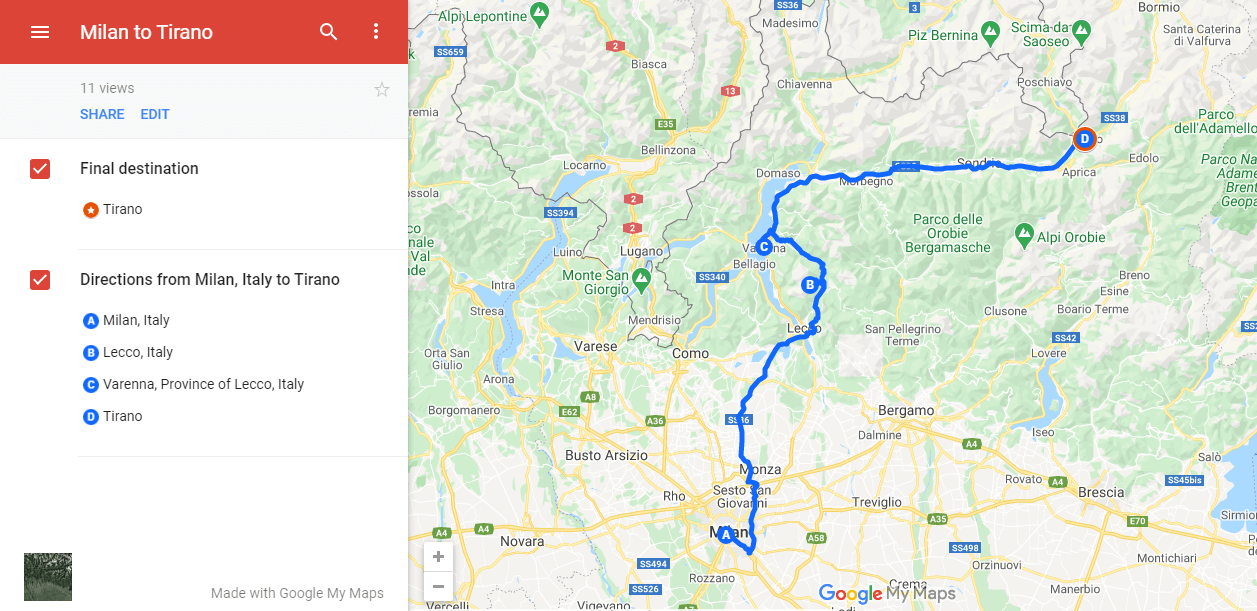
By car via the SS38, Tirano is about 1 hour 30 minutes from Lugano. By train, a change in Sondrio is required. The drive through the Valtellina is itself scenic, passing through vineyards and small mountain towns.
Tirano sits at the Italian end of the Bernina line. Here is how it connects to the full route:
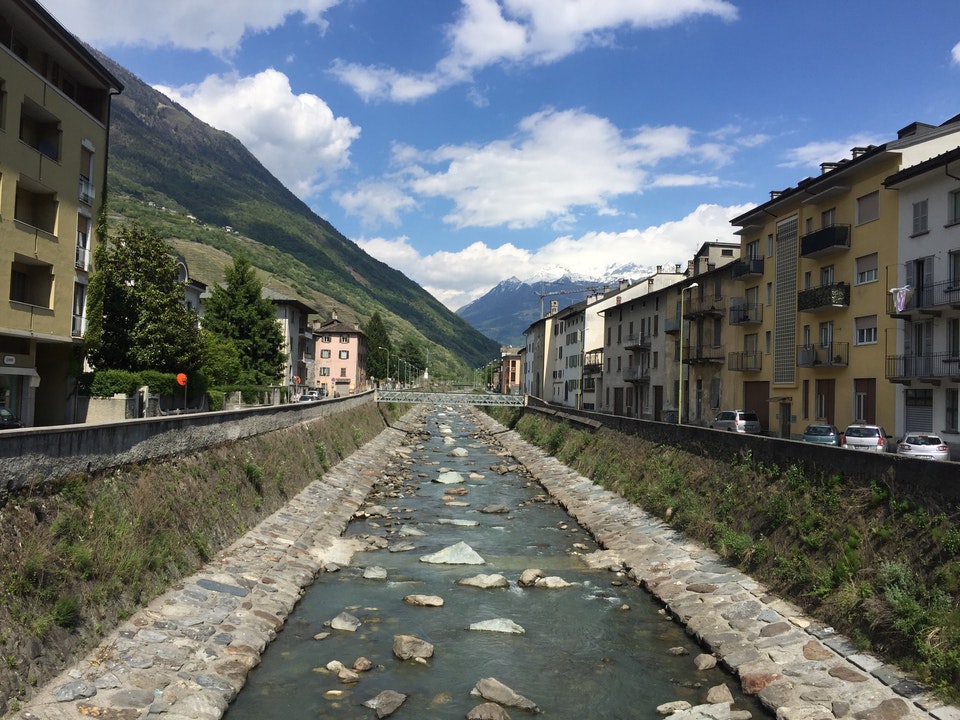
The Valtellina cycle path runs over 100 km along the valley floor between Tirano and Lake Como, following the Adda River. From Tirano, the first 30 km to Sondrio are flat and well-maintained, passing through vineyards, apple orchards, and small villages. Bikes can be rented in town. This is an excellent option for those spending more than a day in the area.
Tirano is much more than a turnaround point. The Santuario della Madonna di Tirano alone is worth stopping for — one of the most beautiful Renaissance churches in northern Italy. Add the historic palaces, local Valtellina food, and the relaxed Italian atmosphere, and Tirano makes for a very pleasant 2–3 hours. If you have more time, the Valtellina valley offers cycling, wine tasting, and further exploration.
Yes, easily. Tirano is about 2 hours 30 minutes from Milan by direct regional train (Trenitalia). A classic itinerary: train from Milan to Tirano in the morning, visit the Santuario and have lunch, then ride the Bernina Express over the Alps to St. Moritz, returning to Milan by PostBus to Lugano and then train. Many guided tours from Milan follow exactly this route — check GetYourGuide for organised options.
Seat reservations are required for the panoramic service and are separate from the train ticket. In peak summer (July–August) and around public holidays, popular departures sell out weeks in advance. Book as early as possible. Check the conditions of your specific booking for what is included and what the cancellation policy is.
The Brusio circular viaduct is a 360° spiral loop on the Bernina railway, located about 8 km from Tirano just inside the Swiss border. The train loops around a full circle to lose altitude gradually. You pass through it on the Bernina Express — visible from the windows for about 1–2 minutes. To photograph it from outside, go to Brusio village and follow signs to the viewpoint.
Yes, entry to the Basilica is free. It is an active church and pilgrimage site — respectful dress (shoulders and knees covered) is expected. The church is open daily but closes during midday and religious services. There is a small museum within the complex that may have a separate entry fee.
Palazzo Salis is occasionally open for guided visits, typically during summer weekends and cultural events. It is a private property that is not open every day. Check locally in Tirano for current opening times when you arrive, or enquire with the tourist office.
Euro (€). Once you cross from Switzerland into Italy, Swiss francs are not accepted. ATMs are available in Tirano and card payments are widely accepted, but carry some cash for smaller purchases.
For a transit visit arriving on the Bernina Express, 2–3 hours is enough to see the Santuario, walk the old town, and have a meal. For a fuller experience including the palaces, cycling, and local wine, plan for a full day or an overnight stay.