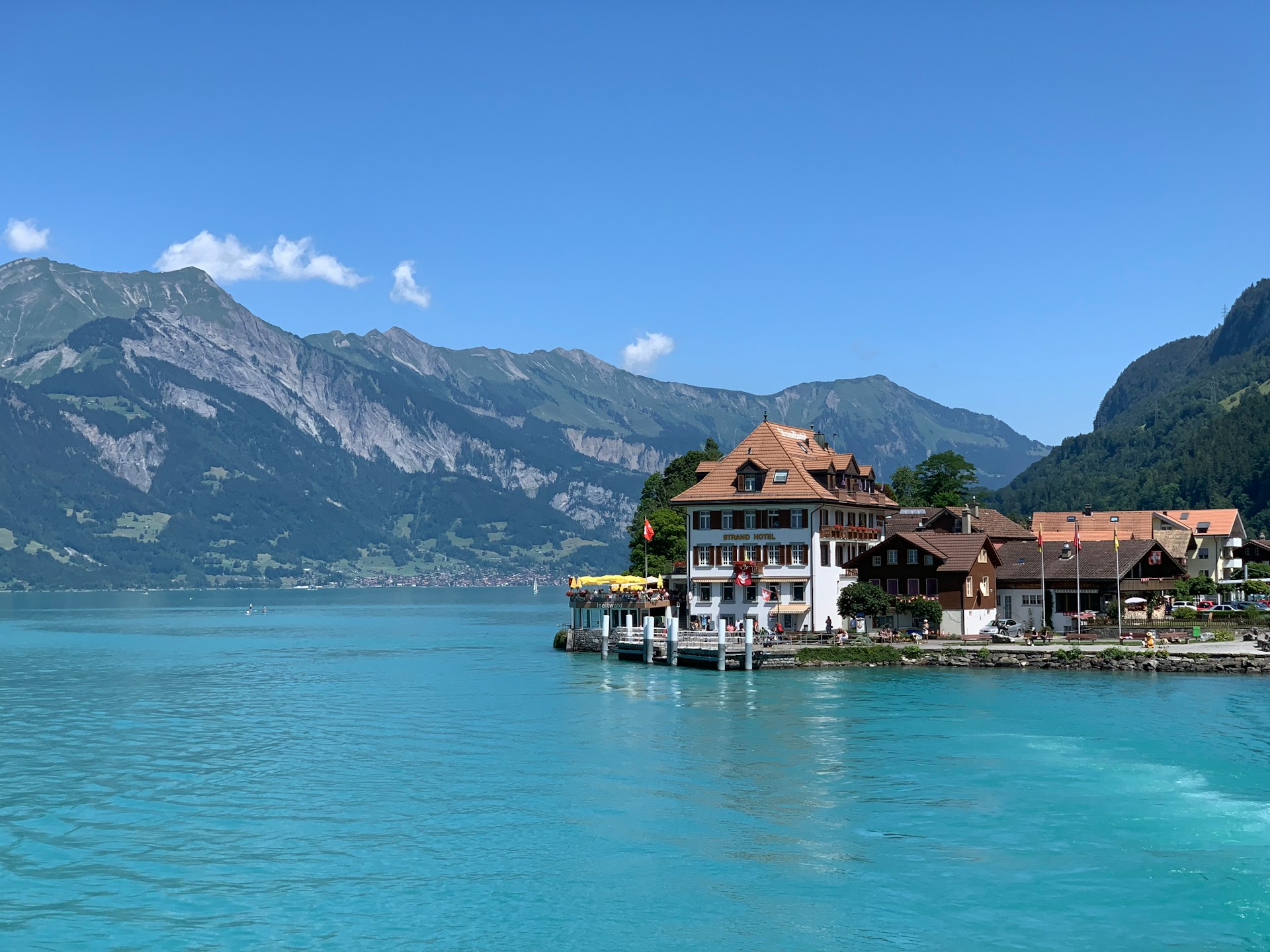
Switzerland's adventure capital, nestled between Lake Thun and Lake Brienz with the Jungfrau massif as a backdrop — gateway to Jungfraujoch, Lauterbrunnen, and Grindelwald.
Explore Interlaken on GetYourGuide →Interlaken sits at 568 m in the Bernese Oberland, on a flat strip of land between Lake Thun (Thunersee) to the west and Lake Brienz (Brienzersee) to the east — the name means "between the lakes." The Jungfrau (4,158 m), Mönch (4,107 m), and Eiger (3,967 m) rise directly to the south, framing the town in a way that is visible from the central park on a clear day.
Interlaken is the main transport hub for the Jungfrau region — the network of mountain railways, gondolas, and villages that includes Grindelwald, Lauterbrunnen, Wengen, Mürren, and Jungfraujoch. Almost every visitor to this part of Switzerland passes through Interlaken, and the town has developed a large tourism infrastructure to match: hotels at every price point, dozens of adventure sport operators, boat services on both lakes, and direct train connections to Bern and Zurich.
It is also one of the most popular destinations in Europe for adventure sports — paragliding, skydiving, canyoning, bungee jumping, and white-water rafting are all available within an hour of the town centre, with operators running year-round.
GetYourGuide offers Jungfraujoch day trips, paragliding experiences, lake cruises, and guided tours from Interlaken with instant confirmation.
View Experiences on GetYourGuide →Interlaken Ost station is the main departure point for trains to Jungfraujoch (3,454 m) — Europe's highest railway station. The journey takes approximately 2 hours each way and involves two or three changes: Interlaken Ost → Grindelwald or Lauterbrunnen → Kleine Scheidegg → Jungfraujoch.
A faster alternative since 2020 is the Eiger Express gondola from Grindelwald Terminal, which cuts the ascent time significantly. Most visitors base in Interlaken for the Jungfraujoch day trip rather than staying in Grindelwald or Lauterbrunnen, since Interlaken offers more accommodation options and a shorter connection time from Zurich or Bern.
For the best experience, take the first train of the morning from Interlaken Ost. Morning skies above 3,000 m are clearest before afternoon clouds build, and the Sphinx observation terrace is far less crowded in the early hours. See our full Jungfraujoch guide for the complete itinerary and tips.
Harder Kulm (1,322 m) is the local mountain directly above Interlaken, reached by a steep funicular from near Interlaken Ost station in about 10 minutes. At the top, the famous Two Lakes Bridge — a viewing platform cantilevered over the cliff — looks directly down on Lake Thun and Lake Brienz flanking the valley, with Interlaken between them and the entire Jungfrau massif (Eiger, Mönch, Jungfrau) filling the southern horizon.
This is the best quick viewpoint in the Interlaken area and far cheaper than ascending to Jungfraujoch. It takes half a day and rewards the effort considerably. The platform restaurant serves food and drinks with the same view. Sunset from Harder Kulm, when the Jungfrau massif turns pink and the two lakes reflect the sky, is one of the finest spectacles in the Bernese Oberland.
Twenty minutes by train south of Interlaken, Lauterbrunnen is one of the most dramatic valleys in the Alps. The town sits at the bottom of a sheer-sided glacial valley, with walls rising nearly 1,000 m on either side. Seventy-two waterfalls descend from the clifftops — the most visible is the Staubbach Falls (297 m), which falls free from the cliff directly above the village and is visible from the train on arrival.
The Trümmelbach Falls, 4 km up the valley, are the most impressive: ten glacier waterfalls inside the mountain, accessible via a tunnel lift carved through the rock. Up to 20,000 litres per second pour through the stone channels in spring snowmelt. They are open from April to November and are among the most unusual natural attractions in Switzerland.
From Lauterbrunnen, a cable car ascends to Wengen — a car-free resort on the sunny shelf above the valley — and a further cable car to Mürren, the car-free village directly facing the Eiger, Mönch, and Jungfrau. Above Mürren, the Schilthorn (2,970 m) — site of the James Bond revolving restaurant Piz Gloria — offers a 360° panorama.
Grindelwald is the other main village in the Jungfrau region, reached by train in 35 minutes from Interlaken Ost. It sits in a broad valley directly beneath the north face of the Eiger — the 1,800 m vertical wall of rock that dominates the view from the village and is one of the most famous mountaineering faces in the world.
Grindelwald is the starting point for the Eiger Express gondola to Eigergletscher, the faster route to Jungfraujoch. It is also the base for the First excursion area (2,168 m), with the First Cliff Walk, hanging bridge, zip line, and mountain cart — one of the best half-day activities in the region that does not require going to 3,000 m altitude.
Many visitors choose to stay in Grindelwald rather than Interlaken for a more mountain-village atmosphere, though accommodation is more limited and expensive.
Interlaken has earned its reputation as the adventure sports capital of Switzerland — and arguably of Europe. The combination of mountains, rivers, and experienced operators makes it one of the most concentrated adventure destinations in the world.
Tandem paragliding launches from Beatenberg or Grindelwald First, with flights lasting 20–30 minutes over the lakes and the Jungfrau massif. No experience required — you fly in a harness attached to a licensed pilot. This is consistently one of the top-rated activities in the Interlaken area, and the views during the flight are extraordinary. Best in clear weather; operators typically reschedule if conditions are poor.
Tandem skydiving from around 4,000 m above the Alps — dropping over the Jungfrau massif and the two lakes. Interlaken's skydiving operation is one of the most scenic in the world. Flights depart from Interlaken airport (Flugplatz Interlaken). No experience required for tandem jumps.
Descending waterfalls, sliding natural rock chutes, and jumping into glacial pools in the gorges of the Saxeten or Lütschine valleys. Several grades are available, from introductory half-day routes to full-day advanced descents. Wetsuit and equipment are provided. Suitable for those comfortable with cold water and heights.
The Lütschine and Simme rivers offer rafting in rapids ranging from Class II (family-friendly) to Class IV (experienced). Half-day trips depart from near Interlaken. Wetsuit and helmet provided. Best in late spring when snowmelt raises river levels.
To the west of Interlaken, Lake Thun is the larger and more developed of the two lakes. Boat services run between Interlaken West and Thun, stopping at villages including Spiez (a charming town with a medieval castle on a vineyard peninsula) and Oberhofen (a fairy-tale castle on the water's edge). The town of Thun itself has a well-preserved medieval centre and the 12th-century Thun Castle — both worth an afternoon if you are continuing to Bern (30 minutes by train from Thun).
To the east, Lake Brienz is narrower, deeper, and less developed — its water is a more intense turquoise blue, fed directly by glacial streams. Boat services run from Interlaken Ost to Brienz, a small town famous for its woodcarving tradition. From Brienz, the Brienz Rothorn Railway — a steam-powered rack railway — ascends to 2,350 m for panoramic views. Nearby, the Ballenberg Open Air Museum is a large outdoor museum with over 100 historic Swiss buildings relocated from across the country. The Giessbach Falls, accessible by boat and a short walk, drop in multiple stages through forest directly beside a historic Belle Époque hotel.
Interlaken has two train stations. Interlaken West is the more central station, closer to the main hotels and the Höhematte park. Interlaken Ost is the station for all trains into the Jungfrau region (Grindelwald, Lauterbrunnen, Jungfraujoch) and for the boat pier on Lake Brienz. Most visitors arriving from Zurich or Bern pass through both — check which station is relevant for your onward journey.
Interlaken is busiest in summer (July–August), when adventure sports are fully operational and Jungfraujoch queues are at their longest. Late May to June and September to October offer the best balance: good weather, fewer crowds, lower prices, and the added bonus of spring flowers or autumn colours. Winter is quieter in Interlaken itself, though the ski resorts of Grindelwald, Wengen, and Mürren are busy December–March.
Book guided tours and activities in Interlaken on GetYourGuide — instant confirmation, free cancellation on most bookings.
Browse the full selection of guided tours, activities, and day trips in Interlaken on GetYourGuide — free cancellation on most bookings.
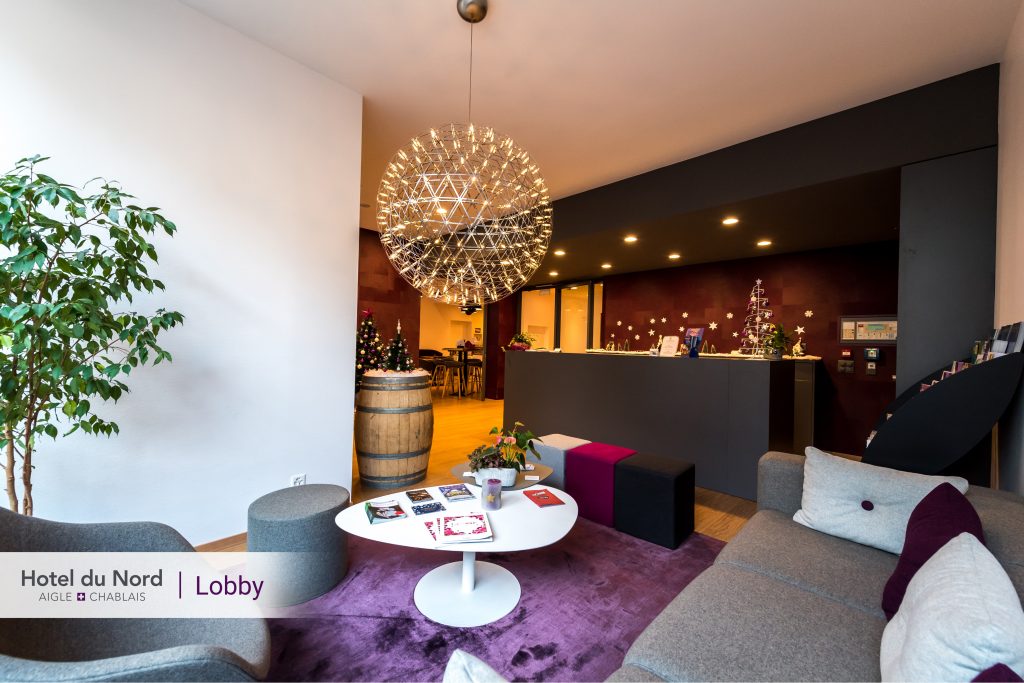
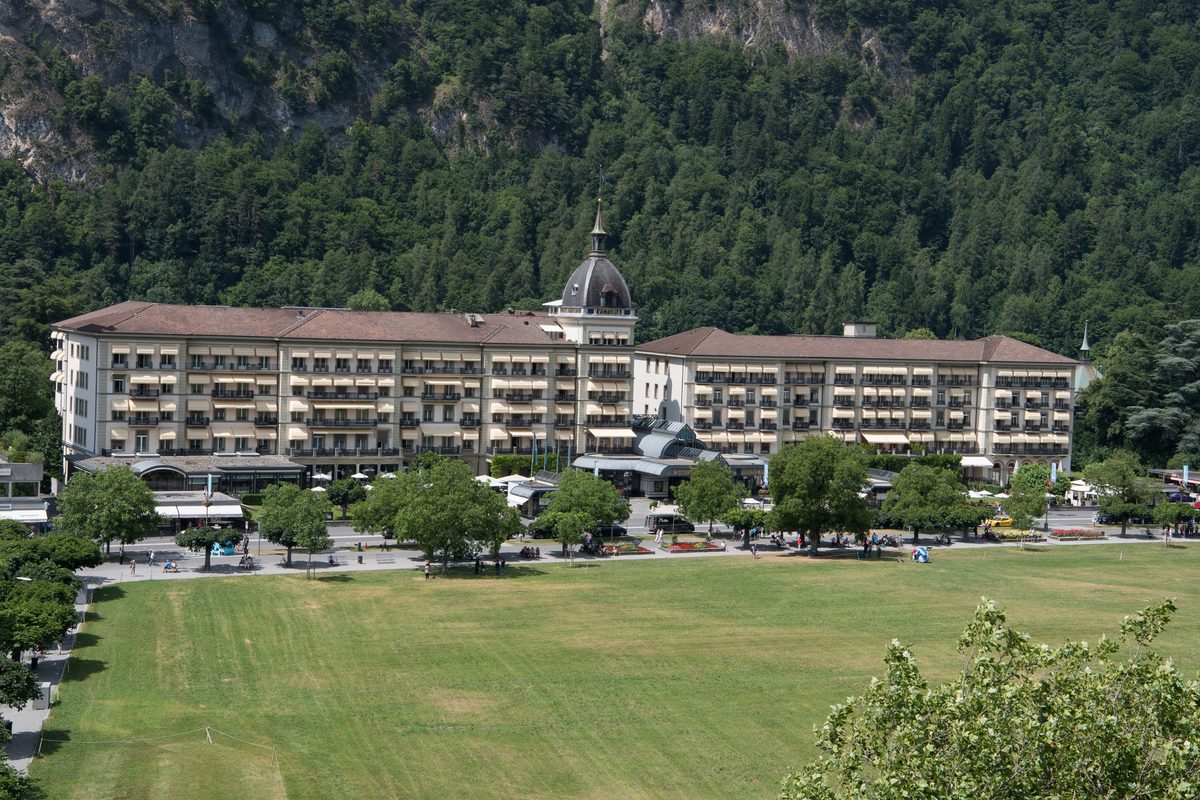
View All Experiences in Interlaken →Interlaken has the widest range of accommodation in the Jungfrau region, from backpacker hostels to one of the grandest hotels in Switzerland.
Compare all available hotels in Interlaken on Klook — filter by price, location, and amenities.
View All Hotels in Interlaken on Klook →Guided day trips handle all train connections to Europe's highest railway station — ideal if you want a seamless experience without planning each transfer.
View Jungfraujoch Day Trips →Yes, for most visitors. Interlaken Ost is the main departure point, it has the widest range of accommodation, and the journey is well-signposted. Grindelwald and Lauterbrunnen are closer to the mountain and give you a head start in the morning, but they have fewer accommodation options and higher prices. For a one- or two-night stay focused on Jungfraujoch, Interlaken is the practical choice.
Tandem paragliding is the most popular first-timer activity — it requires no physical fitness, no experience, and lasts about 20–30 minutes. The views of the lakes and mountains during the flight are exceptional. Canyoning is a good second choice if you prefer something more active at ground level. Skydiving is the most intense option — 60 seconds of freefall before the canopy opens.
Three days is a good minimum: one day for Jungfraujoch, one day for Lauterbrunnen and Grindelwald (or an adventure sport), and one day for a lake boat trip and Harder Kulm. Five days allows you to add the Schilthorn, First Cliff Walk, Ballenberg Museum, and a day on Lake Thun with Spiez and Thun. Interlaken rewards a longer stay — there is genuinely more to do than most visitors expect.
Interlaken West is the more central station, closer to the main shopping street, the Höhematte park, and most hotels. Interlaken Ost is the station for all trains into the Jungfrau region (Grindelwald, Lauterbrunnen, Kleine Scheidegg, Jungfraujoch) and for the Lake Brienz boat pier. Direct trains from Zurich and Bern stop at both. If you are going to Jungfraujoch the next morning, a hotel close to Interlaken Ost saves time.
Yes — on a clear day, the Jungfrau (4,158 m), Mönch (4,107 m), and Eiger (3,967 m) are visible from the Höhematte, the central park of Interlaken. The view is best in the morning before afternoon clouds develop. The Victoria-Jungfrau hotel was deliberately positioned facing this view. Harder Kulm gives a much closer and elevated panorama of the same massif.
Both are valley villages in the Jungfrau region, reachable in 30–40 minutes by train from Interlaken. Grindelwald is broader, more developed, and sits directly under the Eiger north face — it is the base for the Eiger Express gondola and the First excursion area. Lauterbrunnen is narrower and more dramatic — a deep glacial valley with 72 waterfalls, the Staubbach Falls, and the Trümmelbach Falls inside the mountain. Above Lauterbrunnen are the car-free resorts of Wengen and Mürren. They offer different experiences and are worth visiting on separate days if time allows.
Very much so. The lake boats, Harder Kulm funicular, and the train journey to Kleine Scheidegg are all family-friendly. Jungfraujoch is popular with families — children generally handle the altitude well and the Ice Palace is engaging. For adventure sports, minimum ages and weight limits apply — check the conditions of each operator. The Trümmelbach Falls and Ballenberg Open Air Museum are both excellent for older children.