A lakeside resort at the foot of the Alps — with a palm-lined promenade, the medieval Château de Chillon built on a rock in the lake, and the world-famous Jazz Festival every July.
Explore Montreux on GetYourGuide →Montreux sits at the eastern end of Lake Geneva (Lac Léman), where the lake narrows and the Alps close in from three sides. The town is the centre of the Swiss Riviera — a stretch of the northern lake shore between Lausanne and Villeneuve sheltered from cold north winds by the Jorat hills and warmed by the lake's thermal mass, giving a microclimate mild enough to support palm trees, magnolias, and vineyards at the same latitude as Frankfurt.
Montreux has been a resort destination since the 19th century, when the combination of Alpine scenery, mild climate, and lakeside setting attracted artists, writers, and aristocrats from across Europe. Lord Byron visited in 1816 and wrote The Prisoner of Chillon here. Tchaikovsky composed parts of his Fourth Symphony nearby. Freddie Mercury of Queen lived in Montreux for the last decade of his life and recorded much of the band's later work in the Mountain Studios above the lake — a bronze statue of Mercury stands on the lakeside promenade.
Today Montreux is best known internationally for the Montreux Jazz Festival — two weeks each July that fill the town with music, international visitors, and a concentration of live performance that has made it one of the most famous music events in the world since 1967.
GetYourGuide offers Château de Chillon guided tours, Lake Geneva cruises, the Lavaux vineyard experience, and combined day trips from Geneva and Lausanne.
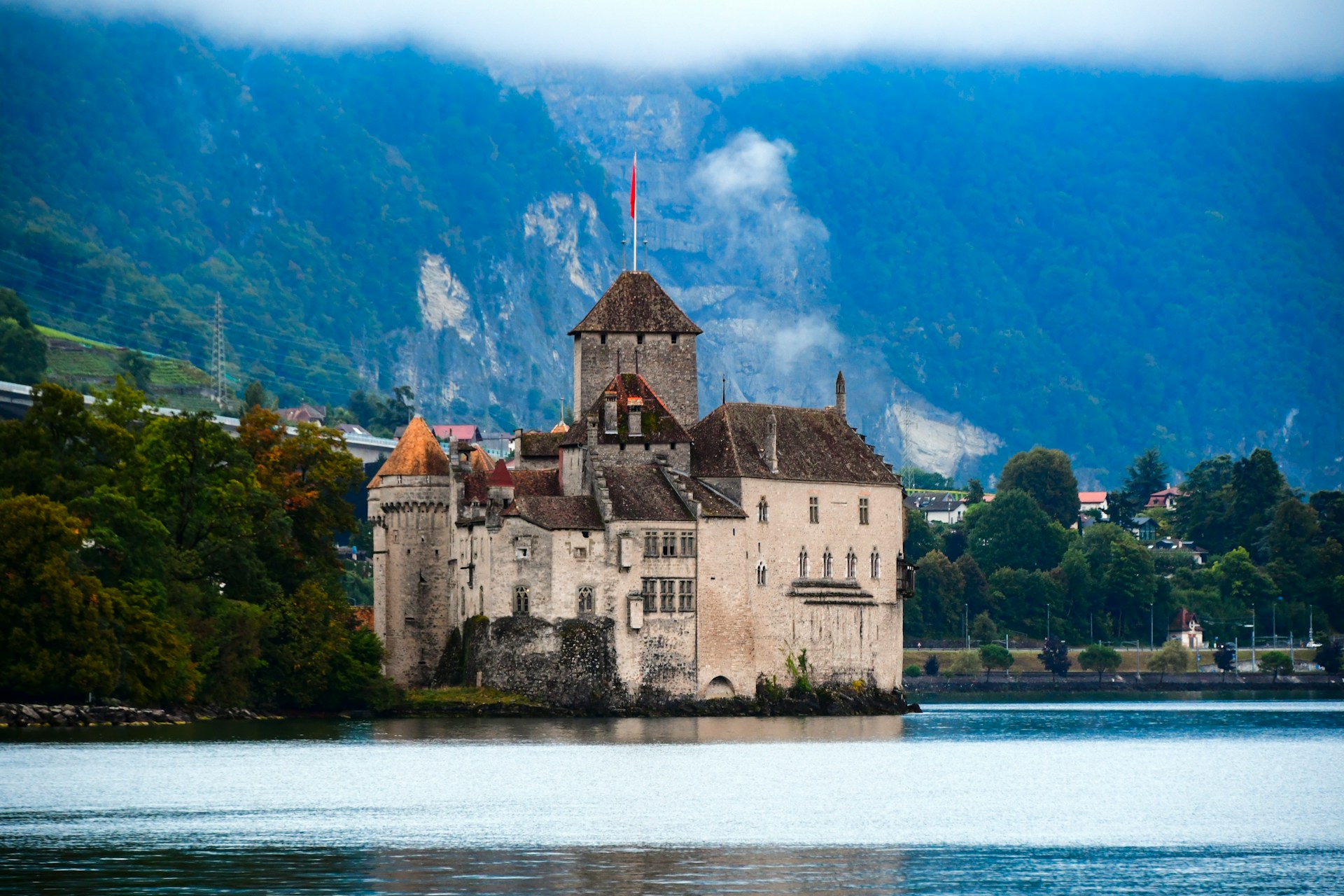
View Montreux Experiences →The Château de Chillon is Switzerland's most visited historic monument — a medieval island castle built on a narrow rock in Lake Geneva, 3 km east of Montreux. Connected to the shore by a drawbridge, it sits directly on the water with the lake on three sides and the Alps rising behind. The visual impact is immediate: the castle looks exactly as a medieval fortress should, in a setting of almost improbable drama.
The castle dates from the 10th century, though the current structure is largely 12th–13th century, built by the Counts of Savoy to control the road between Italy and northern Europe along the lake's southern shore. Its most famous association is with the Genevan patriot François Bonivard, imprisoned in the castle's dungeons by the Duke of Savoy from 1530 to 1536. Lord Byron visited in 1816 and scratched his name into one of the dungeon pillars — still visible — before writing The Prisoner of Chillon, which made the castle internationally famous.
The interior is exceptionally well preserved — the vaulted gothic dungeons, the great hall, the duke's private apartments, and the chapel with its 14th-century frescoes are all accessible and remarkably intact for a building of its age. Admission is around CHF 13.50 for adults. The castle is open daily year-round. Reachable on foot (45 minutes along the lakeside path from Montreux) or by bus from Montreux station in 10 minutes.
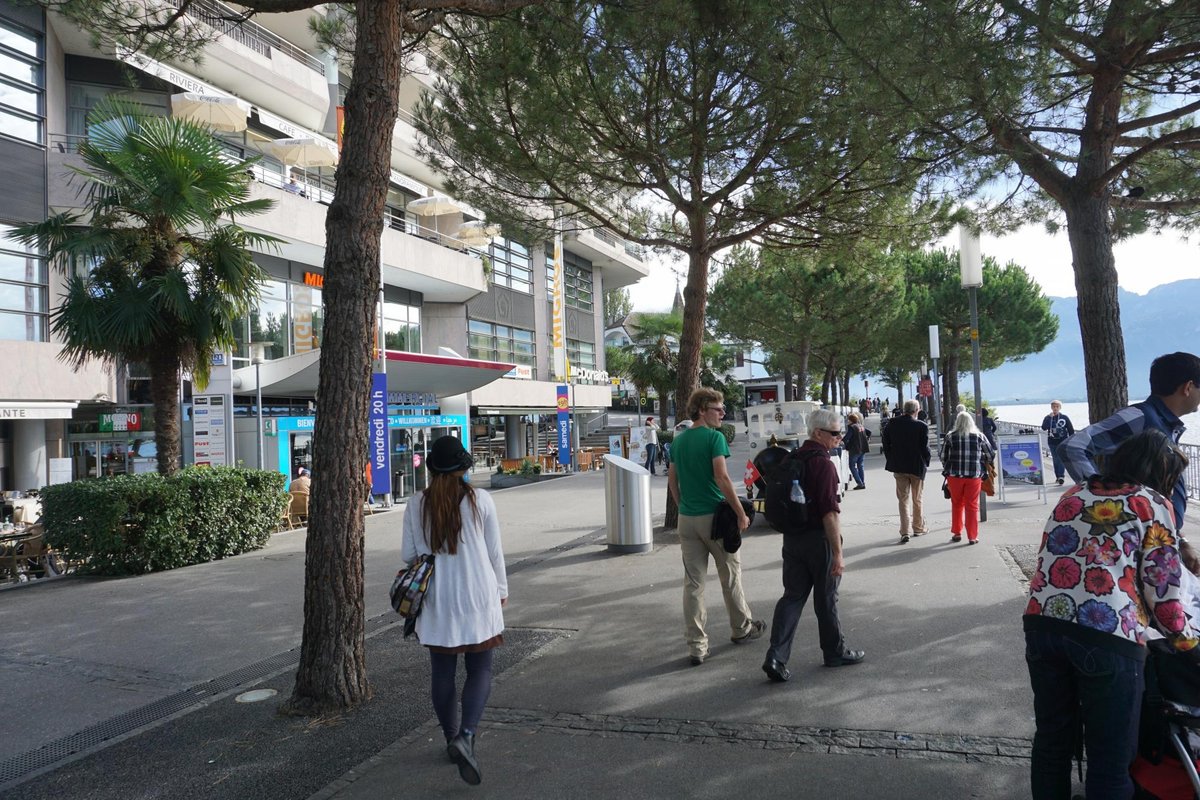
The Quai de la Rouvenaz and the broader lakeside promenade running the length of Montreux is the social heart of the town — a 4 km lakeside walkway lined with flower beds, palm trees, and bronze statues. The promenade connects Montreux with the neighbouring resort of Vevey to the west (a 45-minute walk or 8-minute train) and with Château de Chillon to the east (a 45-minute walk through the suburb of Veytaux).
The Freddie Mercury statue at the western end of the promenade is one of Montreux's most visited landmarks. Mercury lived in a house on the lakefront from the mid-1980s and recorded Innuendo, Made in Heaven, and other late Queen albums in the Mountain Studios (now partly converted into a museum). The bronze figure — life-size, arm raised, facing the lake — was erected in 1996 by the Freddie Mercury Tribute Fund. Flowers are regularly left at its base.
In winter, the Montreux Christmas Market transforms the promenade into one of the most atmospheric Christmas markets in Switzerland — wooden chalets selling handicrafts, mulled wine, and cheese fondue, with the lake and Alps as the backdrop, running from late November through December.
The Montreux Jazz Festival has been held every July since 1967, making it one of the longest-running and most prestigious music festivals in the world. Founded by Claude Nobs, it began as a jazz event but has expanded over the decades to include rock, soul, funk, R&B, electronic, and pop alongside jazz — essentially a showcase of contemporary music in all its forms.
The festival runs for approximately two weeks, with headline concerts in the large Auditorium Stravinski (5,000 capacity) and the Miles Davis Hall (2,000 capacity), alongside dozens of free outdoor concerts on stages along the lakeside promenade. Past headliners have included Miles Davis, Ray Charles, Carlos Santana, David Bowie, Nina Simone, Prince, and virtually every major name in popular music over 50 years.
The free lakeside concerts run throughout the festival day and evening — the atmosphere on the promenade during Jazz Festival week, with the lake, the mountains, and live music in all directions, is one of the most distinctive experiences in Switzerland. Accommodation in Montreux and the surrounding towns books up many months in advance for the festival period; if visiting in July, check festival dates and book early.
Rochers-de-Naye (2,042 m) is the mountain directly above Montreux, reached by a rack railway from Montreux station in about 55 minutes. The line, operated by the Montreux–Bernese Oberland Railway (MOB), climbs steeply through the vineyards above the town, past the resort of Glion and the forest of Caux, before emerging onto the open alpine ridge at the summit.
From the top, the panorama takes in the full length of Lake Geneva, the Rhône valley, the Bernese Alps across the lake, and on clear days Mont Blanc to the south-west. The summit has a restaurant and a small alpine garden (Jardin Alpin) with rare mountain flora from around the world. The descent offers open views of the lake and the Lavaux vineyard terraces the whole way down.
Rochers-de-Naye is also known for its marmot colony near the summit — the animals live semi-wild around the mountain station and are accustomed to visitors, making close observation easy in summer. For families, the summit has a small Santa Claus Village open from late November through January, with reindeer and traditional Christmas activities — one of the more unusual alpine installations.
West of Montreux, the north shore of Lake Geneva is terraced with the Lavaux vineyard landscape — a UNESCO World Heritage Site covering 830 hectares of terraced vineyards carved into the steep hillside between Lausanne and Montreux. The terraces date from the 11th century and produce Chasselas white wine — the characteristic grape of the Swiss Romande — in a landscape of extraordinary visual coherence: row upon row of vines descending to the lake, with the Alps reflected in the water below.
The best way to experience Lavaux is on foot along the Lavaux Vineyard Trail, a waymarked walking route through the villages of Rivaz, Épesses, Riex, and Chexbres, with lake and Alpine views throughout. The trail is accessible by train from Montreux (alight at Rivaz or Cully). Several producers offer cellar visits and tastings — the local Chasselas is best drunk young and pairs well with lake fish. The panoramic train Lavaux Express (a tourist road train) covers the route from Cully and Lutry for those who prefer not to walk.
Montreux has an unusual density of musical history for a town its size. The Mountain Studios, where Queen recorded from the late 1970s through the early 1990s, have been partially preserved as a museum above the Casino. The Deep Purple song Smoke on the Water (1972) was written about an incident in Montreux — a fire during a Frank Zappa concert burned down the Casino while the band watched from across the lake; the opening guitar riff is one of the most recognised in rock music. A plaque near the old Casino marks the spot.
The connection between Montreux and recorded music runs through the Jazz Festival archive — the festival recorded virtually every performance from the early 1970s onwards, creating one of the most extensive archives of live popular music in existence, now managed by the Montreux Jazz Artists Foundation.
Lausanne is 20 minutes by train — the capital of canton Vaud with a Gothic cathedral, the Olympic Museum on the lakefront, and a lively university city atmosphere. Easy to combine with Montreux in a single day.
Geneva is 1 hour by express train. Alternatively, the CGN lake boat from Montreux to Geneva takes about 3.5 hours — a scenic approach to the city past the Lavaux vineyards and the Château de Chillon. Swiss Travel Pass valid on both.
Gruyères — the medieval walled village and cheese-making centre in the Fribourg pre-Alps — is about 1 hour by train from Montreux (change at Bulle). The village itself is a single main street of medieval stone houses within intact walls, with the 13th-century Château de Gruyères at the top. The La Maison du Gruyère cheese dairy below the village runs guided tours of the cheese-making process. An underrated half-day excursion from either Montreux or Lausanne.
Zermatt is reachable in about 2.5 hours from Montreux via Lausanne and Visp. For visitors already on the Lake Geneva arc, Montreux–Zermatt is a logical continuation — the Glacier Express from Zermatt to St. Moritz can be incorporated for a longer Swiss circuit. See our Glacier Express guide for the full route.
Montreux is compact — the station, promenade, town centre, and the rack railway to Rochers-de-Naye are all within easy walking distance. Château de Chillon is a 10-minute bus ride (line 201) or a 45-minute walk along the lakeside. Local buses connect Montreux with Vevey and Lausanne; regional trains run every 20–30 minutes along the lake shore.
Spring (April–June) is arguably Montreux at its best — the flowers along the promenade are at their peak, the lake is calm and reflective, tourist crowds are manageable, and the Alps still have snow. July means the Jazz Festival — extraordinary atmosphere but very crowded and expensive. Summer (August–September) is warm for lake swimming and vineyard visits. November–December brings the Christmas Market — one of the finest in Switzerland and worth a specific visit.
Book guided tours and activities in Montreux on GetYourGuide — instant confirmation, free cancellation on most bookings.
Browse the full selection of guided tours, activities, and day trips in Montreux on GetYourGuide — free cancellation on most bookings.
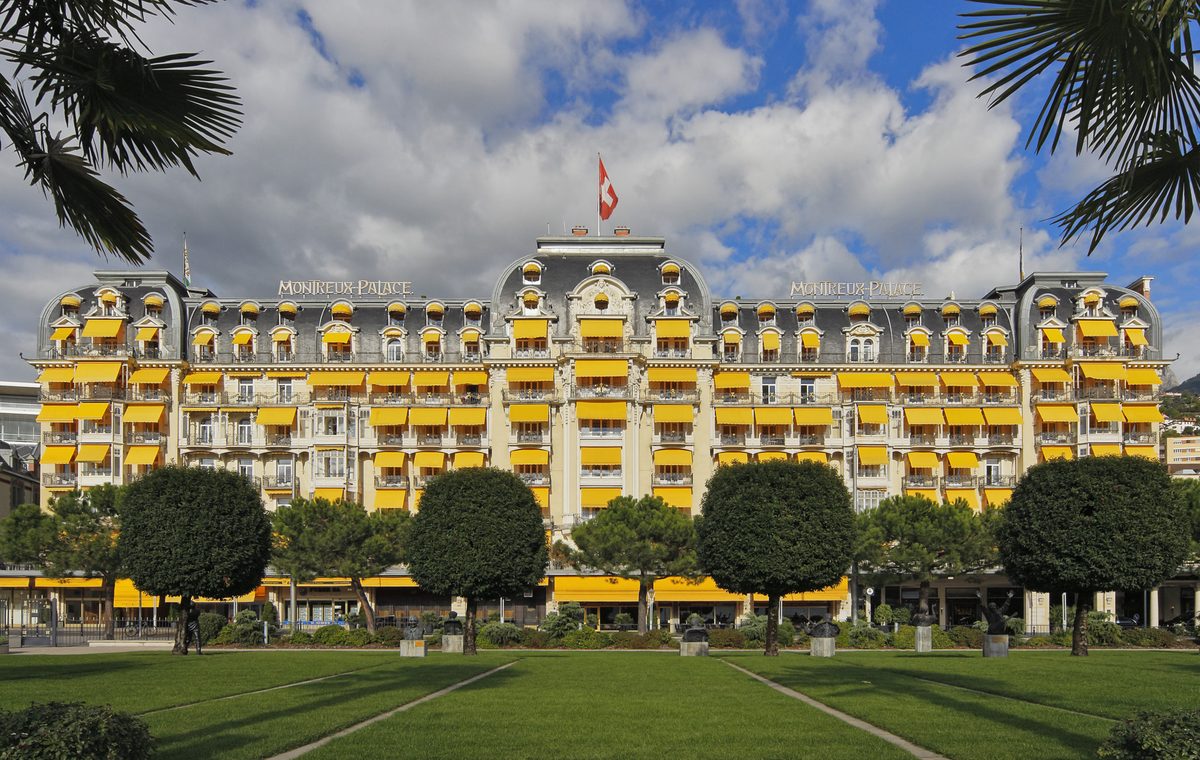
View All Experiences in Montreux →Montreux's accommodation ranges from budget options in the town centre to legendary grand hotels on the lakefront. The neighbouring town of Vevey (8 minutes by train) offers quieter and often cheaper alternatives with easy rail access to Montreux.
Compare all available hotels in Montreux on Klook — filter by price, location, and amenities.
View All Hotels in Montreux on Klook →Guided tours of Switzerland's most visited castle include access to the vaulted dungeons, great hall, and 14th-century chapel frescoes — with the story of Bonivard and Byron's visit.
View Château de Chillon Tours →One full day covers the promenade, Château de Chillon, and the town centre. Two days allows Rochers-de-Naye and a half-day in the Lavaux vineyards or Vevey. Montreux also works well as a day trip from Geneva (1 hour) or Lausanne (20 minutes) — you can see the promenade and Château de Chillon in half a day. If visiting during the Jazz Festival, extend to at least 3 nights to take advantage of the programme.
Yes — for music fans, it is one of the best-curated festival experiences in the world, and the free lakeside concerts mean you can experience the atmosphere without buying tickets. The paid headline concerts in the Auditorium Stravinski are ticketed and sell out quickly. The town during festival week has an extraordinary energy: the promenade is alive with music from early afternoon to midnight, and the combination of lake, mountains, and live music is unlike any other festival setting in Europe. The drawback is crowds and prices — accommodation doubles or triples in cost and books out many months ahead.
Freddie Mercury fell in love with Montreux in the early 1980s during the Jazz Festival. Queen purchased the Mountain Studios in the town in 1979 and used them as their primary recording facility from then on, attracted by the privacy, the scenery, and the technical quality of the facility. Mercury bought a house on the lakefront and lived there for much of the last decade of his life. He died in 1991. The studio is now partly a museum; the bronze statue on the promenade was erected in 1996 and has become one of the most visited landmarks in the region. Every July, a tribute concert at the Jazz Festival marks his connection to the town.
Yes — the lakeside path from central Montreux to Château de Chillon is 3 km and takes about 45 minutes on foot, running along the water's edge through the suburb of Veytaux. The walk itself is pleasant and the approach to the castle on foot — seeing it emerge from around the headland with the lake on three sides — is more atmospheric than arriving by bus. The return can be made by bus (line 201) to Montreux station in 10 minutes if you prefer not to walk both ways.
The Lavaux Vineyard Trail is a waymarked walking route through the UNESCO-listed terraced vineyards between Lausanne and Montreux. The full trail is about 30 km; most visitors walk a section — the stretch from Rivaz to Cully (about 7 km, 2 hours) passes through the most scenic part of the vineyards with the best lake and Alpine views. Start at Rivaz station (20 minutes from Montreux by regional train) and walk west to Cully or Lutry, then return by train. The best time is May–June (vines in leaf) or September–October (harvest season). Several villages along the route have small tasting cellars open to visitors.
From the Montreux area, Rochers-de-Naye (2,042 m, 55 minutes by rack railway) gives the most comprehensive panorama — the full length of the lake, the Lavaux vineyards below, and the Bernese Alps across the water. The viewpoint at Caux (1,050 m, midway up the Rochers-de-Naye line) is less visited and offers a slightly lower but wider lake view, with Château de Chillon visible directly below. From the promenade itself on a clear morning — particularly from the section near the Château — the reflection of the Alps in the still lake is one of the most photographed scenes in Switzerland.